
Educational institutions are becoming increasingly dependent on technology to manage their daily operations. As colleges, universities, training centres, and other institutions grow, managing students, staff, finances, examinations, attendance, and records manually becomes more challenging.
This is why Institute Management Software is becoming an important part of modern institution management. By bringing different administrative and academic activities into one digital platform, Institute Management Software helps institutions improve efficiency, organize information, reduce manual work, and make better decisions.
For colleges in particular, College Management Software provides a centralized way to manage important operations while supporting better communication between departments, staff, students, and management.
What Is Institute Management Software?
Institute Management Software is a digital solution designed to help educational institutions manage their academic, administrative, and operational activities from a centralized system.
Depending on the institution’s requirements, Institute Management Software can support:
- Student admission and registration
- Student records management
- Fee and payment management
- Attendance management
- Examination and results management
- Course management
- Staff management
- Timetable management
- Reporting
- Student communication
- Data management
Instead of depending on separate spreadsheets, paperwork, and disconnected systems, institutions can use Institute Management Software to bring important operations together.
Why Is Institute Management Software Becoming the Future?
The future of institution management is increasingly digital. Institutions need systems that can handle growing amounts of information while helping staff work more efficiently.
Institute Management Software provides the foundation for this transformation by replacing many manual processes with organized digital workflows.
Here are some of the reasons Institute Management Software is becoming the future of institution management.
1. It Reduces Manual Work
Manual administration can consume a significant amount of staff time.
Employees may spend hours entering information, searching through files, preparing reports, calculating balances, recording attendance, and updating student records.
Institute Management Software automates many of these repetitive activities.
With College Management Software, staff can manage information digitally and spend more time on activities that require attention, communication, and decision-making.
2. It Centralizes Institutional Information
Institutions manage large amounts of information every day.
Student details may be stored in one department, fee information in another, and examination records somewhere else. This can make it difficult to get a complete view of a student’s information.
Institute Management Software provides centralized data management.
With College Management Software, authorized users can access relevant information from one system instead of searching through multiple sources.
This creates a more organized approach to institution management.
3. It Improves Student Management
Students are at the centre of every educational institution.
Managing student information effectively is therefore essential.
Institute Management Software can help institutions manage student information from admission through academic progression and completion.
Important information such as personal details, courses, attendance, fees, and examination results can be managed through the system.
College Management Software makes it easier for institutions to maintain organized student records and provide faster access to information.
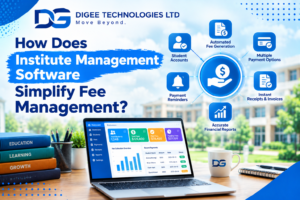
4. It Improves Fee Management
Financial management is another important area of institution administration.
Manual fee records can make it difficult to track payments, balances, and outstanding amounts.
Institute Management Software can simplify fee management by organizing student payment information in one system.
With College Management Software, finance teams can have better visibility into fee records and generate useful financial reports.
This can help institutions improve financial administration and reduce errors associated with manual record keeping.
5. It Makes Attendance Management Easier
Tracking attendance manually can be time-consuming, especially in institutions with large numbers of students.
Institute Management Software can provide a more organized approach to recording and monitoring attendance.
Staff can maintain attendance records digitally and access the information when needed.
Through College Management Software, administrators and academic staff can also use attendance information to monitor student participation and identify areas requiring attention.
6. It Simplifies Examination and Results Management
Examinations involve a large amount of information, including examination schedules, student records, marks, grades, and results.
Managing this information manually can increase the possibility of errors.
Institute Management Software can help institutions organize examination information and simplify results management.
College Management Software can make it easier to maintain academic records, retrieve results, and prepare reports.
This creates a more efficient examination management process.
7. It Improves Communication
Effective communication is essential for modern institutions.
Students need information about fees, examinations, timetables, registration, announcements, and academic activities.
Institute Management Software can support better communication by helping institutions organize and share important information.
With College Management Software, different departments can also access shared information, reducing communication gaps within the institution.
8. It Supports Better Reporting
Institutional management requires accurate information.
Management needs reports to understand student numbers, fee collection, attendance, examination performance, and other important activities.
Preparing these reports manually can take considerable time.
Institute Management Software can simplify reporting by organizing information in a centralized system.
College Management Software can help management access useful reports and make decisions based on organized institutional data.
9. It Improves Data Accuracy
Data errors can affect many areas of institution management.
Incorrect student information, fee balances, attendance records, or examination results can create unnecessary administrative problems.
Institute Management Software helps reduce errors by creating structured digital records and reducing repeated manual data entry.
Using College Management Software can therefore help institutions maintain more accurate and consistent information.
10. It Supports Departmental Collaboration
Educational institutions have many departments that depend on one another.
Admissions, finance, academic departments, examinations, administration, and student affairs may all need access to related information.
Without an integrated system, departments may rely on emails, paperwork, spreadsheets, or physical files to exchange information.
Institute Management Software connects different departments through shared digital information.
This makes collaboration easier and helps create a more coordinated institution.
11. It Improves Data Security
Institutions manage sensitive student and organizational information.
Paper files and unsecured spreadsheets can make information difficult to control.
Institute Management Software can provide controlled access to institutional data, allowing administrators to determine which users can access particular information.
College Management Software can therefore support better organization and protection of important institutional records.
12. It Supports Remote Access
Modern institutions increasingly need access to information beyond traditional office environments.
Depending on the system’s design and deployment, Institute Management Software can allow authorized users to access information from different locations.
This can support administrators and staff who need to review information, manage operations, or generate reports without being tied to a particular physical file cabinet or office computer.
13. It Helps Institutions Save Time
Time is an important resource in education.
When staff spend less time searching for information, entering duplicate data, and preparing manual reports, they can focus more on students and institutional priorities.
Institute Management Software helps automate and organize routine processes.
As a result, College Management Software can contribute to more efficient use of staff time across different departments.
14. It Supports Institutional Growth
As an institution grows, its administrative workload also increases.
More students mean more records, more transactions, more attendance information, more examinations, and more communication.
Manual systems can become increasingly difficult to manage as the institution expands.
Institute Management Software provides a scalable approach to managing growing amounts of institutional information.
With suitable College Management Software, institutions can improve their ability to manage increasing workloads without relying entirely on additional manual processes.
15. It Enables Data-Driven Decision-Making
Modern institutions need reliable information to make informed decisions.
Management can use information about student enrolment, attendance, fees, academic performance, and other activities to understand institutional performance.
Institute Management Software brings this information together and makes it easier to analyze.
College Management Software can therefore support data-driven decision-making and help institutional leaders identify areas that need improvement.
Institute Management Software vs Manual Institution Management
| Manual Management | Institute Management Software |
|---|---|
| Heavy paperwork | Digital records |
| Repeated data entry | Reduced duplication |
| Slow information retrieval | Faster access to information |
| Difficult reporting | Simplified reporting |
| Separate departmental records | Centralized information |
| Higher risk of manual errors | Improved data accuracy |
| Time-consuming processes | More efficient workflows |
| Limited information visibility | Better institutional visibility |
The comparison shows why more institutions are moving toward Institute Management Software.
How College Management Software Supports Digital Transformation
Digital transformation is not simply about replacing paper with computers. It involves improving the way an institution operates, communicates, manages information, and serves students.
College Management Software can support this transformation by connecting different institutional processes through one digital platform.
Instead of treating admissions, finance, attendance, examinations, student records, and reporting as completely separate activities, Institute Management Software can bring these functions together.
This creates a more connected and efficient approach to institution management.
What Should Institutions Look for in Institute Management Software?
Before selecting Institute Management Software, institutions should consider their specific needs.
Important features to evaluate include:
Ease of Use
The system should be simple for staff and administrators to understand and use.
Comprehensive Management
The Institute Management Software should cover important academic and administrative activities.
Data Management
The software should provide organized storage and easy access to institutional information.
Reporting
Good College Management Software should provide useful reports for administrators and management.
Security
The system should provide appropriate access controls for protecting institutional information.
Scalability
The software should be capable of supporting the institution as it grows.
Integration
Different departments should be able to work with connected information rather than isolated records.
Why College Management Software Is Important for Modern Colleges
Colleges manage complex operations involving students, lecturers, administrators, finance teams, academic departments, and management.
Managing these activities manually can create unnecessary delays and administrative challenges.
College Management Software provides a centralized platform for managing many of these processes.
From student registration and fee management to attendance, examinations, reporting, and communication, College Management Software can help colleges operate more efficiently.
This makes Institute Management Software an important investment for colleges looking to modernize their operations.
The Future of Institution Management Is Digital
The future of institution management will continue to focus on efficiency, accessibility, automation, data, and better user experiences.
Institutions that continue relying entirely on manual processes may find it increasingly difficult to manage growing workloads.
Institute Management Software provides the digital foundation needed to modernize institutional operations.
With the right College Management Software, institutions can reduce administrative workload, improve information management, strengthen collaboration, and provide better services to students and staff.
Conclusion
The future of institution management is increasingly digital, and Institute Management Software is playing an important role in this transformation.
From student management and fee administration to attendance, examinations, reporting, communication, and data management, Institute Management Software can bring important institutional processes together.
For colleges, College Management Software provides a practical way to improve administrative efficiency while giving staff and management better access to institutional information.
As educational institutions continue to grow and adopt digital processes, investing in reliable Institute Management Software can help them build more efficient, organized, and data-driven operations.
Digee Technologies Ltd helps institutions embrace digital solutions that support better management, improved efficiency, and sustainable institutional growth.