
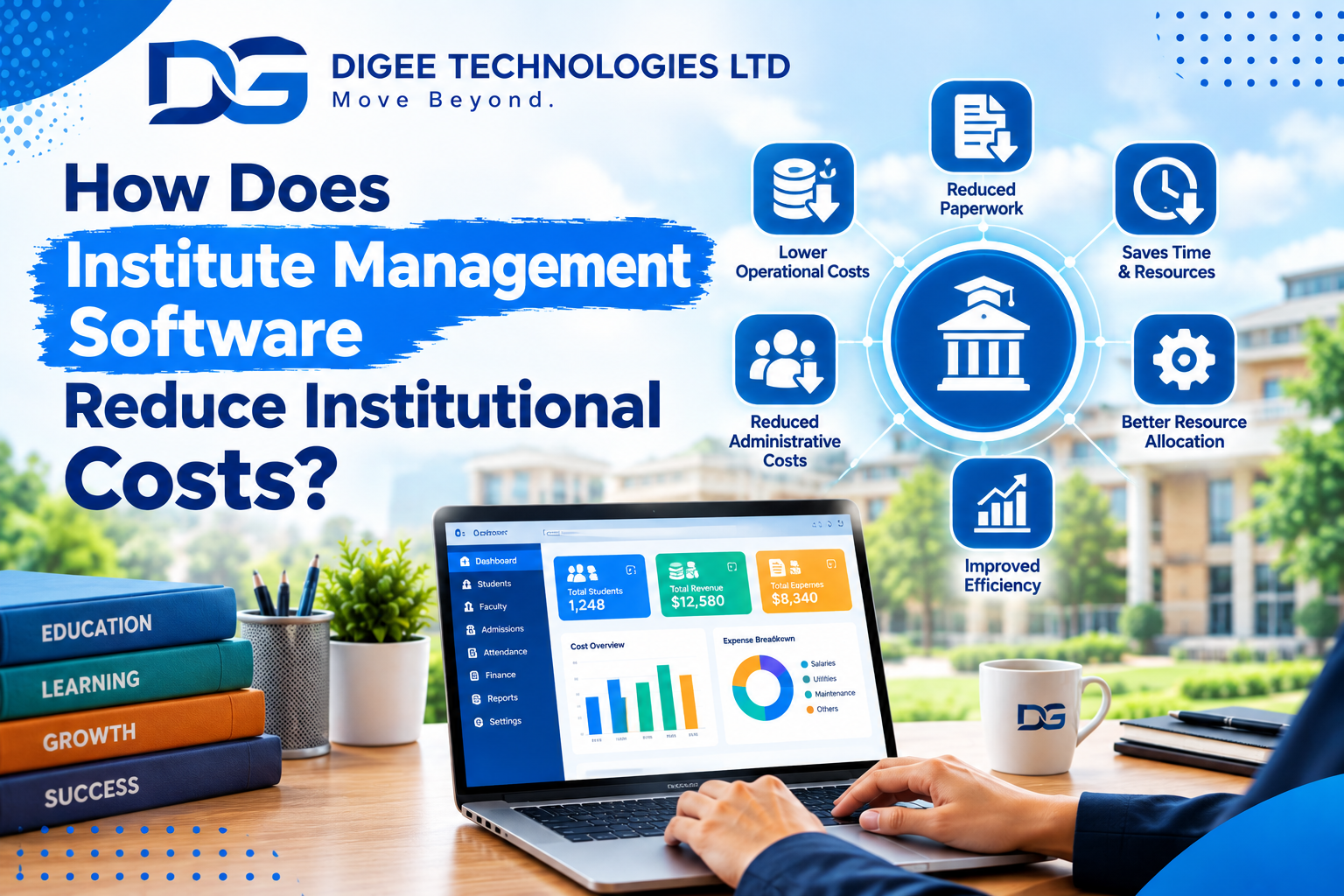
Managing an educational institution involves many expenses. Colleges, universities, training centres, and other institutions spend money on administration, paperwork, staff time, data management, communication, fee collection, record keeping, and daily operations.
As institutions grow, these costs can increase significantly when most processes are handled manually. Paper records, spreadsheets, repetitive data entry, and disconnected systems can consume valuable time and resources.
This is where Institute Management Software becomes valuable. By automating and centralizing important institutional processes, Institute Management Software can help reduce unnecessary operational costs while improving efficiency.
For colleges, College Management Software provides a centralized platform for managing students, fees, attendance, examinations, records, staff, reporting, and other activities. This allows institutions to use their resources more effectively and reduce the cost associated with inefficient manual processes.
What Is Institute Management Software?
Institute Management Software is a digital platform designed to help educational institutions manage academic, administrative, financial, and operational activities.
A comprehensive Institute Management Software solution can support areas such as:
- Student admissions
- Student records
- Fee management
- Attendance management
- Examination management
- Results management
- Course management
- Staff management
- Timetable management
- Reporting
- Communication
- Data management
Instead of relying on multiple manual systems, institutions can use College Management Software to bring these activities together in one organized platform.
Why Are Institutional Costs Difficult to Control?
Many institutional expenses are not necessarily caused by major purchases. They can result from small inefficiencies repeated every day.
For example, staff may spend hours:
- Searching for student files
- Entering the same information repeatedly
- Preparing reports manually
- Calculating fee balances
- Updating spreadsheets
- Printing documents
- Managing paper records
- Correcting data entry errors
- Communicating information through multiple channels
Over time, these activities consume staff time, stationery, printing resources, storage space, and other institutional resources.
Institute Management Software helps reduce these inefficiencies by automating and organizing many routine processes.
How Does Institute Management Software Reduce Institutional Costs?
1. Reduces Paper and Printing Costs
Paper-based administration can become expensive for institutions with large numbers of students.
Printing admission forms, student records, fee statements, attendance sheets, examination documents, reports, notices, and other records can create continuous expenses.
Institute Management Software allows institutions to manage many records digitally.
With College Management Software, staff can create, store, retrieve, and manage information electronically, reducing dependence on physical documents and unnecessary printing.
2. Saves Staff Time
Time is one of an institution’s most valuable resources.
Manual processes often require staff to perform repetitive administrative tasks that could be simplified through technology.
Institute Management Software can automate or streamline activities such as student registration, attendance recording, fee tracking, reporting, and record management.
When employees spend less time on repetitive administrative work, the institution can make better use of its existing workforce.
College Management Software therefore helps institutions improve productivity without continuously increasing administrative workload.
3. Reduces Duplicate Data Entry
Duplicate data entry is a common problem in manual institution management.
The same student information may be entered separately by admissions, finance, academic departments, and examination offices.
This consumes time and increases the possibility of errors.
Institute Management Software allows authorized departments to access shared information, reducing the need to repeatedly enter the same data.
By minimizing duplication, College Management Software can help institutions save both time and operational resources.
4. Reduces Data Entry Errors
Errors can create hidden costs for institutions.
Incorrect student information, fee balances, attendance records, or examination results may require staff to spend additional time identifying and correcting problems.
Institute Management Software provides structured digital records that can reduce unnecessary manual handling.
With College Management Software, institutions can maintain more consistent information across departments and reduce the administrative cost of correcting avoidable errors.
5. Simplifies Fee Management
Fee management is an important financial function within any institution.
Manual fee records can make it difficult to track payments, balances, outstanding fees, and financial transactions.
Institute Management Software helps organize fee information in a centralized system.
College Management Software can make it easier for finance teams to monitor payments, identify outstanding balances, and generate financial reports.
Better fee management can improve financial visibility and reduce the administrative effort required to manage student payments.
6. Reduces Record Storage Costs
Physical records require storage space.
As student numbers increase, institutions may accumulate large quantities of files, forms, registers, examination documents, and financial records.
Maintaining physical storage can require office space, filing equipment, and ongoing organization.
Institute Management Software provides digital storage for institutional information, reducing dependence on physical filing systems.
This can help institutions make better use of available office space while making records easier to retrieve.
7. Reduces Administrative Workload
Administrative departments often handle large volumes of information every day.
Without suitable technology, staff may spend considerable time performing routine tasks.
Institute Management Software can streamline workflows and reduce unnecessary manual activities.
For colleges, College Management Software can connect admissions, finance, academic departments, examinations, student affairs, and administration.
This creates more efficient workflows and helps reduce the amount of time spent coordinating routine activities.
8. Makes Reporting More Cost-Effective
Preparing reports manually can take a significant amount of staff time.
Information may need to be collected from different departments, checked, organized, and entered into spreadsheets before a final report can be produced.
Institute Management Software centralizes institutional data and simplifies access to important information.
With College Management Software, management can generate reports from organized institutional data, reducing the time and effort required for manual reporting.
9. Reduces Communication Costs
Institutions communicate with students, staff, parents, departments, and management regularly.
Traditional communication methods can involve printing notices, producing physical documents, or manually contacting individuals.
Institute Management Software can help organize institutional communication through digital systems.
College Management Software can make it easier to share important information about fees, examinations, timetables, announcements, and academic activities.
This can reduce unnecessary communication expenses while improving information delivery.
10. Improves Resource Utilization
Effective resource management is essential for controlling institutional costs.
When management has access to organized information, it becomes easier to understand how resources are being used.
Institute Management Software provides better visibility into different areas of institutional operations.
For example, management can use reports to monitor student numbers, fee collection, attendance, academic activities, and departmental performance.
College Management Software can therefore support more informed resource allocation.
11. Reduces the Cost of Manual Attendance Management
Manual attendance tracking requires staff to record, organize, store, and review attendance information.
For large institutions, this can create a significant administrative workload.
Institute Management Software provides digital attendance management that makes recording and retrieving attendance information easier.
This reduces the time spent handling attendance registers and preparing attendance reports.
12. Makes Examination Management More Efficient
Examinations generate a large amount of administrative information.
Managing examination schedules, student lists, marks, grades, and results manually can require considerable staff effort.
Institute Management Software can organize examination-related information in one system.
Through College Management Software, institutions can simplify examination administration and reduce the time spent managing academic records manually.
13. Supports Better Staff Productivity
The goal of Institute Management Software is not simply to reduce the number of tasks performed by employees. It is to help employees work more efficiently.
When routine activities are simplified, staff can focus on more important responsibilities such as student support, academic coordination, planning, and institutional improvement.
College Management Software can therefore improve productivity by helping staff spend more time on meaningful activities.
14. Reduces the Cost of Inefficient Decision-Making
Poor decisions can be costly.
When management does not have accurate information, it may be difficult to identify problems, control expenses, or plan effectively.
Institute Management Software provides access to organized institutional information and reports.
This allows management to make decisions based on available data rather than relying entirely on assumptions or incomplete records.
15. Supports Institutional Growth Without Excessive Administrative Costs
As an institution grows, its administrative workload also increases.
More students mean more records, payments, attendance information, examinations, and communication.
If every new student requires significant additional manual work, administrative costs can rise quickly.
Institute Management Software helps institutions handle increasing workloads through digital processes.
A suitable College Management Software solution can support institutional growth while reducing dependence on manual administrative processes.
Institute Management Software vs Manual Management
| Cost Area | Manual Management | Institute Management Software |
|---|---|---|
| Paperwork | High | Reduced |
| Printing | Frequent | Reduced |
| Data entry | Repetitive | Streamlined |
| Record storage | Physical space required | Digital storage |
| Reporting | Time-consuming | Faster |
| Fee tracking | Manual | Centralized |
| Attendance | Paper-based | Digital |
| Communication | Often manual | More organized |
| Data errors | Higher risk | Reduced |
| Staff productivity | Lower | Improved |
This comparison shows how Institute Management Software can help institutions control operational costs while improving efficiency.
How College Management Software Helps Colleges Save Money
Colleges manage multiple departments and large amounts of information.
Without integrated technology, each department may maintain separate records and processes.
College Management Software brings these activities together.
For example, student information entered during admission can be made available to authorized finance, academic, attendance, and examination functions.
This reduces duplication and makes better use of existing institutional resources.
By adopting Institute Management Software, colleges can reduce unnecessary administrative work and improve operational efficiency.
Is Institute Management Software Worth the Investment?
Institutions may initially view Institute Management Software as a technology investment. However, the value of the system should be considered beyond its purchase or implementation cost.
The software can generate savings through:
- Reduced paperwork
- Less printing
- Lower administrative workload
- Faster reporting
- Reduced duplicate data entry
- Better fee management
- Improved staff productivity
- Reduced record management costs
- Better resource utilization
- Improved operational efficiency
The long-term value of College Management Software comes from helping institutions work more efficiently and use their resources more effectively.
What Should Institutions Consider When Choosing Institute Management Software?
To achieve meaningful cost savings, institutions should choose Institute Management Software that matches their operational needs.
Important factors include:
Ease of Use
The system should be simple for administrators and staff to use.
Comprehensive Features
The Institute Management Software should cover important institutional processes without requiring multiple disconnected systems.
Scalability
The system should support the institution as student numbers and operations grow.
Reporting
Good College Management Software should provide useful reports that help management monitor institutional performance and resources.
Data Security
Institutional information should be protected through appropriate access controls and security measures.
Integration
An integrated system can reduce duplicate processes and help departments work with shared information.
The Long-Term Cost Benefits of Institute Management Software
The financial benefits of Institute Management Software can extend beyond immediate administrative savings.
As institutions continue to grow, the volume of information and transactions also increases. A manual system may require additional staff time, storage, paperwork, and administrative resources.
Institute Management Software creates a more scalable digital environment.
By automating repetitive processes and centralizing information, College Management Software can help institutions manage growth more efficiently.
This makes digital management an important part of long-term institutional planning.
Conclusion
Controlling costs is important for every educational institution. However, reducing costs should not mean reducing the quality of services provided to students and staff.
Institute Management Software provides a practical way to reduce unnecessary administrative expenses while improving institutional efficiency.
From reducing paperwork and printing to simplifying fee management, attendance, examinations, reporting, communication, and student records, Institute Management Software can help institutions use their resources more effectively.
For colleges, College Management Software provides a centralized platform that connects different departments and reduces the need for repetitive manual processes.
As institutions continue to grow and become more digital, investing in reliable Institute Management Software can help reduce operational costs, improve productivity, and support sustainable institutional growth.
Digee Technologies Ltd provides digital solutions that help educational institutions modernize their operations, improve efficiency, and manage institutional processes more effectively.